 KEY HIGHLIGHTS
· Total Rutile Mineral Resource increases to 2.1 billion tonnes at 0.96% rutile for 20.3Mt contained rutile with 0.95% TGC for 20.0Mt contained graphite (M,I&I)
· Measured and Indicated (M&I) contained rutile surges 32% to 16.1Mt (1.6 billion tonnes at 0.98% rutile) – a material increase in resource confidence ahead of DFS
· Measured Resource planned to be mined and processed in first six years of operations – highest confidence JORC Code category, achieved at Kasiya for the first time
· Resource upgrade delivers the classification standard required for bankable DFS – a critical milestone on the path to project financing
Sovereign Metals Limited (ASX:SVM; AIM:SVML; OTCQX:SVMLF) (Sovereign or the Company) is pleased to announce an updated Mineral Resource Estimate (MRE) for its flagship Kasiya Rutile-Graphite Project (Kasiya or Project) in Malawi.
The updated MRE will serve as the resource base for the Kasiya Definitive Feasibility Study (DFS) mine schedule, replacing the previous April 2023 MRE (Previous MRE).
Combined Measured and Indicated rutile Resources have grown 38% to 1,652Mt, now representing 77% of the total Resource base. This material improvement in Resource confidence reflects the extensive infill drilling programs completed and provides a robust foundation for the forthcoming DFS. Importantly, Kasiya has achieved a Measured Resource for the first time, which represents at least the first six years of planned operations.
Managing Director and CEO Frank Eagar commented:
“This updated MRE is a significant milestone for Sovereign as we advance Kasiya through the Definitive Feasibility Study. The 32% increase in Measured and Indicated contained rutile, together with our first-ever Measured Resource, reflects both the quality of our geological dataset and the exceptional nature of this deposit. The rigour of the updated resource estimation gives our strategic and commercial partners and us high confidence in the resource base underpinning our potential mine schedule. Kasiya remains unmatched globally as a source of natural rutile, and this MRE update reinforces its potential as a long-life, low-cost supplier to critical global supply chains.”
UPDATED MINERAL RESOURCE ESTIMATE
Table 1: Kasiya Rutile Mineral Resource Estimate (March 2026)
|
Class |
Tonnes (Mt) |
Rutile Grade (%) |
Rutile (Mt) |
TGC (%) |
TGC (Mt) |
Rutile Eq. (%) |
|
Measured |
107 |
1.05 |
1.12 |
1.56 |
1.67 |
1.94 |
|
Indicated |
1,545 |
0.97 |
14.99 |
1.05 |
16.26 |
1.57 |
|
Total M&I |
1,652 |
0.98 |
16.12 |
1.09 |
17.93 |
1.60 |
|
Inferred |
452 |
0.91 |
4.12 |
0.45 |
2.02 |
1.17 |
|
Total Rutile MRE |
2,105 |
0.96 |
20.24 |
0.95 |
19.95 |
1.51 |
Note: Rutile Mineral Resource defined from a pit shell with mineralisation defined as >= 0.75% Rut95 for the pit shell optimisation run. A rutile concentrate net price of US$1,400 was used to determine economic value. Graphite had no value for this run. The Rutile MRE is reported based on all rutile mineralisation >=0.4% Rut95 within the optimised pit shell. Any apparent differences in totals are due to rounding.
Table 2: MRE Comparison – Previous vs. Updated
|
Metric |
Previous MRE |
Updated MRE |
Change |
|
Total Resource Tonnes (Mt) |
1,809 |
2,105 |
+16% |
|
Measured & Indicated Tonnes (Mt) |
1,200 |
1,652 |
+38% |
|
M&I Contained Rutile (Mt) |
12.2 |
16.1 |
+32% |
|
Total Contained Rutile (Mt) |
17.9 |
20.2 |
+13% |
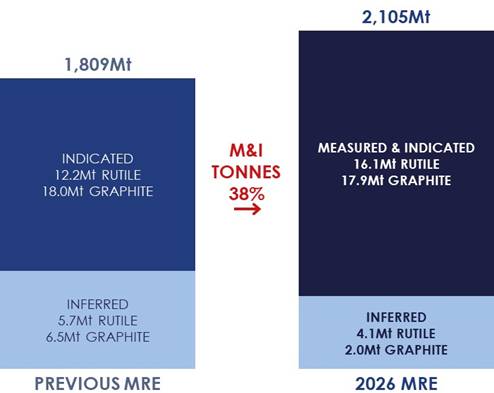
Figure 1: Increase in Kasiya MRE across categories
The updated MRE provides the resource foundation for the upcoming DFS mine schedule and mine optimisation study. The step-up in Measured and Indicated resource confidence is a critical input for the DFS, enabling the Company to present a resource base with the classification level required for bankable project financing and offtake discussions.
Sovereign’s DFS is progressing across all workstreams including mining, processing, infrastructure, environmental and social studies, and commercial arrangements.
MRE EMPHASISES SOVEREIGN’S STRATEGIC SIGNIFICANCE FOR GLOBAL SUPPLY CHAINS
Kasiya is a uniquely diversified source of critical minerals essential to defence, industrial and energy security. The updated MRE demonstrates Kasiya’s potential to supply titanium-bearing rutile and graphite for several decades and its position as the world’s single most strategically important source of rutile.
Natural rutile is a critical mineral essential to titanium metal production for aerospace, defence and medical applications. According to leading titanium consultants TZ Minerals International Pty Ltd (TZMI), demand for rutile from the titanium metals industry is forecast to grow 3% annually, while global supply is expected to decline by 7% per year over the next decade. The market faces a widening structural deficit.
Natural rutile commands a significant premium over alternative titanium feedstocks due to its superior grade (95%+ TiO₂), lower processing costs, and smaller environmental footprint. With no meaningful domestic production in key consuming nations, Kasiya‘s scale and quality position it as the single most strategically important source of natural rutile outside of current producing regions.
With the updated MRE, Kasiya is positioned to address this critical supply gap at a time when new sources of natural rutile are urgently needed.
The graphite resource further enhances Kasiya’s strategic value with a second critical mineral. With graphite demand forecast to grow 9% annually across battery and industrial applications (Benchmark Mineral Intelligence), the Project’s 20.0Mt contained graphite provides significant exposure to a valuable by-product.
KASIYA MRE TECHNICAL DETAILS
The Kasiya MRE has been prepared by Sovereign under guidance by MSA Group and is reported in accordance with the JORC Code (2012) (JORC).
Rutile mineralisation lies in laterally extensive, near-surface, flat “blanket” style bodies in areas where the weathering profile is preserved and not significantly eroded. The high-grade zones are relatively geologically consistent with limited variability along and across strike. The mineralisation style is illustrated best in Figure 2 below.
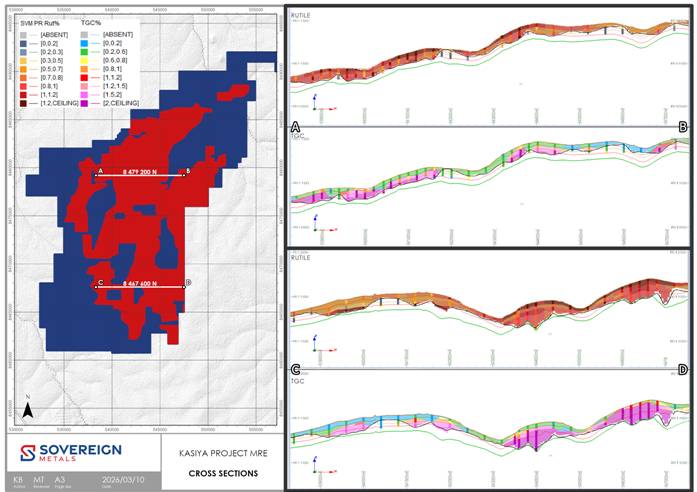
Figure 2: MRE with E-W Cross Sections 8,479,200N (A-B) and E-W Cross Sections 8,467,600N (C-D) (cross section are at +/- 100m with 30x vertical exaggeration)
SUMMARY OF RESOURCE ESTIMATE REPORTING CRITERIA
As per ASX Listing Rule 5.8 and the JORC reporting guidelines, a summary of the material information used to estimate the MRE is detailed below.
Geology
Regional Geology
The greater part of Malawi is underlain by crystalline Precambrian to lower Palaeozoic rocks referred to as the Malawi Basement Complex. In some parts, these rocks have been overlain unconformably by sedimentary and volcanic rocks ranging in age from Permo-Triassic to Quaternary. The Basement complex has undergone a prolonged structural and metamorphic history dominated by uplift and faulting, resulting in the formation of the Malawi Rift Valley.
Kasiya is located on the Lilongwe Plain, which is underlain by the Basement Complex paragneisses and orthogneisses, which are part of the Mozambique Belt. The bulk of the gneisses are semi-pelitic, but there are bands of psammitic and calcareous rocks that have been metamorphosed under high pressure and temperature conditions to granulite facies.
Interspersed within the paragneiss units are lesser orthogneisses, often cropping out as conspicuous tors, as well as amphibolites, pegmatites and minor mafic to ultramafic intrusions. Foliation and banding in the gneisses have a broad north-south strike over the general area. Thick residual soils and pedolith with some alluvium overlie the gneisses and include sandy, lateritic and dambo types.
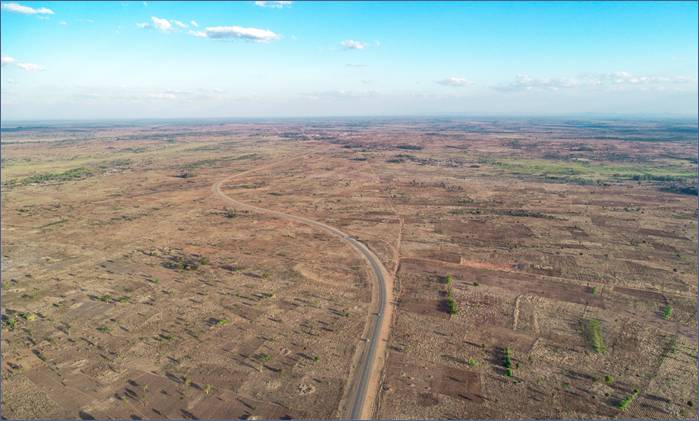
Figure 3: Drone photo above the Kasiya Deposit showing the open, flat terrain
Project Geology
Sovereign’s tenure covers 644 km2 over an area to the north, west and south of Malawi’s capital city, covering the Lilongwe Plain. The topography is generally flat to gently undulating, and the underlying geology is dominated by paragneiss with pelitic, psammitic and calcareous units.
A particular paragneiss unit is rich in rutile and graphite and is the primary source of both minerals in the area. This area was deeply weathered during the Tertiary, and rutile concentrated in the upper part of the weathering profile, forming residual placers, such as the Kasiya deposit. Once this material is incised and eroded, it is transported and deposited into wide, regional braided river systems, forming alluvial heavy mineral placers such as the Bua Channel.
Kasiya Deposit Geology
The high-grade rutile deposit at Kasiya is best described as a residual placer, or otherwise known as an eluvial heavy mineral deposit. It is formed by weathering of the primary host rock and concentration in place of heavy minerals, as opposed to the high-energy transport and concentration of heavy minerals in a traditional placer.
The presence of abundant kyanite and graphite in the host material suggests a meta-sedimentary protolith. The protolith likely started with a 0.5-1.5Ga basin that also experienced a consistent influx of titanium minerals.
These sedimentary rocks were subject to granulite facies metamorphism under reduced conditions in the Pan-African Orogeny. The metamorphic facies, reduced environment, relatively high titanium content and low iron content resulted in rutile being the most stable titanium mineral under these conditions. Slow exhumation and cooling then resulted in re-crystallisation as paragneisses containing coarse rutile and graphite.
The final and most important stage of rutile enrichment came as tropical weathering during the Tertiary depleted the top ~8m of physically and chemically mobile minerals. This caused significant volume loss and concurrent concentration of heavy resistate minerals, including rutile and kyanite.
Rutile mineralisation therefore lies in laterally extensive, near-surface, flat “blanket” style bodies in areas where the weathering profile is preserved. The Kasiya deposit shows widespread, high-grade mineralisation commonly grading 1.2% to 2.0% rutile in the top 3-5m from surface. Moderate grade mineralisation, generally grading 0.5% to 1.2% rutile, commonly extends from 5m to the base of the soft saprolite unit to typically 20-30m depth, where it terminates on the hard saprock basement.
Graphite generally occurs in broad association with rutile. However, it is depleted in the top 3-5m and therefore can often show an inverse grade relationship with rutile in the near-surface zones. At depths generally greater than 5m, graphite is not depleted, and rutile is not particularly enriched, so a more consistent grade relationship exists.
Drilling Techniques
Spiral hand-auger (HA) drilling, Push-tube and/or diamond core (PTDD), and Air core (AC) drilling methods have been used extensively at the Kasiya deposit by Sovereign to define mineralisation and to obtain quantitative rutile and graphite (TGC) assay information.
HA drilling was executed by Sovereign field teams using a manually operated enclosed-flight Spiral Auger (SP / SOS) system produced by Dormer Engineering in Queensland, Australia. The HA bits are 62mm and 75mm in diameter with 1m long steel rods. Each 1m of drill advance is withdrawn and the contents of the auger flight removed into bags and set aside. An additional 1m steel rod is attached and the open hole is re-entered to drill the next metre. This is repeated until the drill hole is terminated often due to the water table being reached or due to bit refusal. The auger bits and flights are cleaned between each metre of sampling to avoid contamination.
PTDD drilling is undertaken using a drop hammer Dando Terrier MK1 and a drop hammer DL650 by Geo-consult and Thompsons Drilling. The drilling generated 1m runs of 88mm PQ core in the first 2m and then transition to 61mm core for the remainder of the hole. Core drilling is oriented vertically by spirit level.
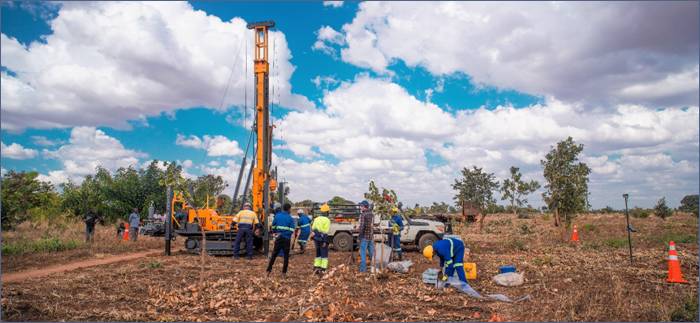
Figure 4: Core drilling (push tube) in action at Kasiya
AC drilling was completed by Thompson Drilling utilising a Smith Capital 10R3H compact track-mounted drill. The drilling is vertical and generates 1m samples with care taken in the top metres to ensure good recoveries of the high-grade surface material. The AC sample is collected by the on-board cyclone into heavy-duty RC sample bags. Drilling continues until bit refusal onto basement ~20-30m. Sample bags are immediately transported back to Sovereign’s field laydown yard where they are processed. AC drilling is on a nominal 200m by 200m pattern.
The drilling programs to date show a surface mineralised extent, defined nominally by a 0.7% rutile cut-off, of approximately 268.6 km2 with numerous areas of high-grade rutile and graphite defined.
The PTDD and AC twin and density sample holes are selectively placed throughout the deposit to ensure a broad geographical and lithological coverage for the analysis.
MSA has reviewed Standard Operating Procedures (SOPs) for HA, SA, PTDD and AC drilling and found them to be fit for purpose and support the resource classifications as applied to the MRE.
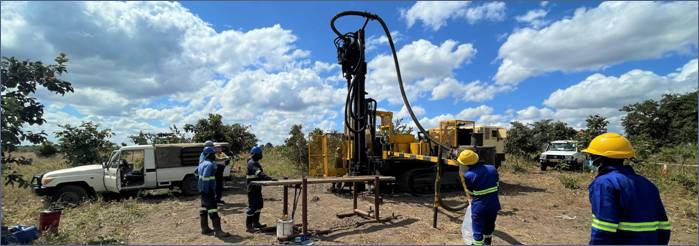
Figure 5: Air-core (AC) drilling at Kasiya in May 2022.
Sampling Techniques
HA samples are obtained at 1m intervals generating on average approximately 2.5kg of drill sample. HA samples are manually removed from the auger bit and sample recovery is visually assessed in the field. As samples become wet at the water table and recovery per metre declines, the drill hole is terminated. Each 1m sample is sun dried, logged and weighed. HA samples are composited based on regolith weathering boundaries defined by geology logging. Each 1m of sample is dried, lightly pressed to remove soft aggregates and riffle-split to generate a total sample weight of 3kg for analysis, generally at 2 – 5m intervals. This primary sample is then riffle split again to provide a 1.5kg sample each for rutile and graphite analyses.
SA samples are bulk spiral auger samples primarily designed to collect a large sample for metallurgical and pilot plant testwork. Bit sizes range from 300 mm to 700mm diameter. The samples are collected on 1m intervals, laid out on a large tarpaulin to be sun dried before using a cone and quarter method (for the 700mm diameter) to produce a roughly 100kg sample which is then riffle split to produce a 3kg sample, with the file split providing 1.5 kg each for rutile and graphite analysis. Samples are analysed in 1m intervals.
PTDD samples are predominantly from HQ sized core (61mm diameter). Half core 1m samples are sun dried, logged and weighed. Samples are then lightly pressed and composited over 2m intervals. An equal mass is taken from each contributing metre to generate a 1.5kg composite sample. Individual recoveries of core samples are recorded on a quantitative basis. Core recovery is very good overall at >95%.
AC samples are collected in 1m increments. AC samples are dried, riffle split, lightly pressed and composited. Samples are collected and homogenised prior to splitting to ensure sample representivity. ~1.5kg composite samples were defined by the regolith boundaries in earlier drilling. More recent AC drilling utilised regular 2m downhole composites. An equivalent mass is taken from each primary sample to make up the composite.
During 2024 twin drilling campaigns, samples were processed at 1m intervals to get a better understanding of drilling and deposit variability.
The sampling and compositing methods described are considered appropriate and reliable based on accepted industry practice. MSA completed an on-site audit of sampling and sample processing and deemed the processes fit for purpose.
Sample Analysis Methodology
All samples arrive at Sovereign’s Malawi laboratory where they are sorted and checked in. Graphite samples are identified and prepared for export, while the equivalent rutile samples begin the sample workflow to generate the rutile non-magnetic concentrate (NM) for export for TiO2 and multi-element XRF analysis. Prior to June 2024 XRF analysis was completed at ALS Perth, Western Australia, currently Scientific Services South Africa (SS) laboratory in Cape Town, South Africa is being used. Umpire checks have shown good correlation between the two external laboratories. Audit of Sovereign’s laboratory premises, staff, sample analysis and QA procedures was completed by MSA during two site visits in 2024 and 2025.
SVM Malawi Laboratory Rutile Workflow
· Samples are dried in a commercial oven for 1 hour at 105℃ and a dry raw samples mass is recorded.
· Samples are soaked in 1% Tetrasodium pyrophosphate (TSPP) solution overnight and then lightly agitated prior to wet screening.
· Wet screening occurs at 5mm, 600µm and 45µm to remove oversize and slimes (-45µm) material. Each +45µm retained fraction is dried, logged and weighed.
· The resulting sand fraction +45µm -600mm is oven dried for 1 hour at 105℃ after which its dry weight is recorded.
· The sand fraction is then passed over a Gemeni wet shaking table at a constant feed rate to generate a heavy mineral concentrate (HMC).
· Heavy Liquid Separation (HLS) at Diamantina Laboratories in Perth was initially trialled as a preferred separation method but was quickly superseded (supported by QA analysis) by wet-table separation on account of substantial near-density gangue material reporting to the HM sink for the HLS technique. The HLS analyses represent 6% of the MRE assay dataset.
· The wet-tabled HMC is then subject to magnetic separation @ 16,800G (2.9Amps), producing a magnetic (Mag) and non-magnetic (NMag) fraction. The separation is performed using a Mineral Technologies Reading Pilot IRM (Induced Roll Magnetic) purchased by Sovereign and located at the Company’s laboratory in Malawi. Pre-2022, this step was completed by Allied Mineral Laboratories Perth (AML) in Perth, Western Australia.
The Malawi onsite laboratory sample preparation methods are considered quantitative to the point where the NMag concentrate (containing the rutile) is produced. Several generations of QEMSCAN analysis of the NMag and Mag fractions performed at ALS Metallurgy show dominantly clean and liberated rutile grains and confirm that rutile is the only titanium species in the NMag fraction.
Recovered rutile is defined and reported here as: TiO2 recovered in the SAND +45 to -600um range to the NMag concentrate fraction as a % of the total primary, dry, raw sample mass divided by 95% (to represent an approximation of final product specifications). i.e recoverable rutile within the whole sample.
Graphite Testwork
Once secured the 1.5kg graphite sample are delivered to Intertek Group plc (Intertek) in Johannesburg, South Africa, 750g of each 1.5kg graphite sample is pulverised to -75um with a 150g dissolved in dilute hydrochloric acid to liberate carbonate carbon. The solution is filtered using a filter paper, and the collected residue is then dried to 425°C in a muffle oven to drive off organic carbon.
The 150g dried sample is transported to Perth, Australia where it is then combusted in an Eltra CS-800 induction furnace infra-red CS analyser to yield total graphitic or elemental carbon (TGC).
QAQC
Accuracy monitoring is achieved through submission of certified reference materials (CRM’s). Sovereign uses internal and externally sourced wet screening reference material inserted into samples batches at a rate of 1 in 20.
SS, ALS and Intertek both use internal CRMs and duplicates on XRF and TGC analyses. Sovereign also inserts its customised CRMs into all sample batches at a rate of 1 in 20.
Analysis of sample duplicates is undertaken by standard statistical methodologies (Scatter, Pair Difference and QQ Plots) to test for bias and to ensure that sample splitting is representative. Standards determine assay accuracy performance, monitored on control charts, where failure (beyond 2SD from the accepted mean value of the standard) initiates investigation and may trigger re-processing of the affected batch.
Examination of the QA/QC sample data indicates satisfactory performance of field sampling protocols and assay laboratories providing acceptable levels of precision and accuracy. Rutile determination by alternate methods showed no material bias.
Estimation Methodology
Datamine Studio RM, LeapFrog and Supervisor software are used for the data analysis, variography, geological interpretation and resource estimation.
A 3D block model honouring the geology boundaries which included weathering horizons; barren mafic intrusives; surface clay horizons and presence of barren or low grade amphibolite was created. The model was also coded with the tenement EL codes, rock in-situ dry bulk density and moisture content.
Rutile mineralisation was defined as the last intercept >=2m down hole exceeding 0.4% rutile. Generally, rutile grade is highest at the surface gradually reducing in grade with depth. Using this guideline very little internal low grade/waste is introduced. The resulting sample point data was used to create the bounding lower surface digital terrane model (DTM) for a rutile mineralisation, topography DTM is the upper surface. Additional manual points were interpreted section by section to ensure consistency especially in areas with wider spaced drilling.
Graphite mineralisation was defined as the highest up hole intercept >=2m exceeding 0.6% TGC. Generally TGC grade is highest at depth gradually reducing in grade closer to the surface. Using this guideline very little internal low grade/waste is introduced. A graphite mineralisation upper limit DTM was constructed following a similar process to that used for the Rutile DTM. The lower limit of graphite mineralisation was either the base of drilling or the top of SAPR if drilling intersected SAPR.
Eight grade domains were created, 4 mineralised and 4 low grade / waste for both rutile and graphite. The domains are derived from the combination of weathering type inside or outside the mineralisation DTM’s. Samples were composited to 1 sample per drillhole per domain. Rutile and TGC samples were treated independently as there is no correlation between rutile and TGC grades.
The composite populations generally approximated normal distributions with some -ve and/or +ve skewness relating to the imposed mineralisation boundary.
Ordinary Kriging (OK) was considered the best grade estimator for both rutile and graphite due to the near normal grade populations and adequate variograms. Variography analysis was used to determine domain nugget effect and OK search and neighbourhood parameters.
Each grade domain was treated as a 2D seam and estimated using OK with dynamic anisotropy which followed the broad mineralisation continuity trends. No declustering or removal of twin data was required, as OK is an efficient declustering algorithm, and the post OK checks demonstrated no negative weights in the mineralised zones. Any areas not estimated were set to waste grades.
The parent cell size used is equivalent to the average drill hole spacing within the Indicated Resource (200m*200m). XY sub-celling to 50m*50m is adequate resolution for horizontal boundaries. Seam modelling ensured the mineralisation, weathering and topography layers were vertically accurate (within the 50m horizontal resolution). Grade was estimated using the parent cell panel size.
Grade estimation was constrained by hard boundaries (domains) that result from the geological interpretation and mineralisation interpretation.
Top Capping was applied to the composites considered to be outliers to reduce local high grade bias. Generally <1% of samples had a grade cap applied.
Validation of the grade estimate was completed both visually and statistically. Visual validation by loading the model and drill hole files and annotating, colouring and using filtering to check for the appropriateness of the estimate. Distributions of section line averages (swath plots) for drill holes and models were prepared for each zone and orientation for comparison purposes.
The resource model has appropriately averaged the informing drill hole data and is considered suitable to support the resource classifications applied to the estimate.
In-situ dry bulk density was calculated from 400 core samples taken from geographically and lithologically representative sites across the deposit. Dry bulk density is calculated from PT drill core using a cylinder volume wet and dry method performed by Sovereign in Malawi. Shelby tube core samples collected from the 2024 PTDD drill program were analysed by CIVILAB in South Africa.
Bulk density data was coded by weathering horizon. Population distributions were then reviewed and obvious outlies removed. Either the mean or median were used as the average for each weathering and/or rock type domain.
The average in-situ dry bulk density of the total MRE is 1.60 t/m3. This is derived from using an average density of 1.39 t/m3 for the SOIL; 1.58 t/m3 for the FERP, 1.66 t/m3 for the MOTT; 1.68 t/m3 for the PSAP; and 1.77 t/m3 for SAPL. (Definitions provided in Appendix 1 below).
Mining and Metallurgy Factors
Dry-mining has been determined as the optimal method of mining for the Kasiya Rutile deposit. The materials competence is loose, soft, fine and friable with no cemented sand or dense clay layers, allowing for a free dig mining method. It is considered that the strip ratio would be zero or near zero. Dilution is minimal as rutile mineralisation occurs from surface and mineralisation is generally gradational with few sharp boundaries.
Recovery parameters have not been factored into the estimate. However, the valuable minerals are readily separable due to their density differential and flotation characteristics and are expected to have high recoveries through the proposed conventional wet concentration plant for rutile and flotation for graphite, as demonstrated by metallurgical test work. Graphite losses occur predominantly in the desliming and wet gravity circuit, with flotation recoveries above 95% in variability testing.
Sovereign has announced three sets of metallurgical results to the market (24 June 2019, 9 September 2020 and 7 December 2021), relating to the Company’s ability to produce a high-grade rutile product with a high recovery via simple conventional processing methods. Subsequent to this Sovereign has reported results related to metallurgical testwork within the following market announcements:
· “Kasiya Scoping Study Confirms Globally Significant Natural Rutile Project” dated 16 December 2021;
· “Kasiya Expanded Scoping Study Results” dated 16 June 2022; and
· “Kasiya Pre-Feasibility Study Results” dated 28 September 2023.
Sovereign engaged AML to conduct the metallurgical test work on the rutile circuit inclusive of the ongoing DFS to provide input for metallurgy and engineering process design. The work has consistently shown a premium quality rutile product of 95.0%+ TiO2 with low impurities could be produced with recoveries of up to 98% and with favourable product sizing.
Sovereign has also received third-party confirmations for the quality of its rutile product, including validation from one of Japan’s premier titanium metal (sponge and ingot) producers, Toho Titanium Company Limited (Toho). Toho has confirmed the suitability of natural rutile from Kasiya for manufacturing high-specification titanium products.
Gravity separation was effective at concentrating graphite to a “light mineral pre-concentrate” due to its low specific gravity (~2.2 t/m³), providing an upgrade of graphite grade to the flotation circuit to about three times the run-of-mine grade.
The “light tailings” from processing the 45-600 micron ore to generate the rutile-enriched HMC is combined with “light tailings” from wet table gravity processing the 600 micron to 1mm size fraction of the ore to maximise coarse graphite recovery.
Graphite testwork programs were conducted at SGS Canada – Lakefield, ALS Limited, and Core Resources Pty Ltd in Australia at benchtop and pilot scales, including variability testwork, with pilot-scale programs supported by rougher flotation at Maelgwyn Mineral Services Africa (Pty) Ltd in South Africa to reduce shipment masses. A conventional graphite flotation and milling flowsheet was used, except for no milling prior to rougher flotation.
Classification
The Kasiya MRE has been classified as Measured, Indicated or Inferred.
JORC classification considered geological understanding; mineralisation continuity; drilling and sampling quality and spacing; OK estimation efficiency (KE) and confidence (SoR); with consideration of the proposed mining method and scale.
The dominant control on grade distribution within the mineralised zone is intensity of weathering. Rutile is a mineral resistant to weathering and is concentrated by depletion of less resistant minerals during the weathering process resulting in higher grades near the surface where more intense weathering has taken place. The weathering profiles are consistent and readily defined by logging of drill samples.
Both rutile and graphite mineralisation have been well defined by drilling with appropriate sample analysis to determine recovered rutile in-situ grade and in-situ TGC. Both mineralisation zones are broad and continuous with rutile dominant in the Soil, FERP and MOTT horizons, and graphite in the MOTT, PSAP and SAPL horizons. There is significant overlap of the two mineralisation zones. The mineralisation is truncated either by changes in the protolith or displaced by mafic intrusives. Recent drainage has also impacted mineralisation continuity. Minor near surface clay lenses and metamorphic ‘pegmatitic’ zones also displace mineralisation. These very minor internal ‘waste’ zones are readily visually identifiable during mining (as seen during the 2024 trial mining exercise) and can be selectively either mined or bypassed. The dominant zones of mineralisation exceed 10km of strike continuity and range from 1 to 4 km in width.
Regional exploration was completed on a nominal 800m square grid, with infill to 400m followed by either 200m square or 200m offset grid. Twin holes plus some close spaced geostatistical drilling, close spaced channel sampling during the trial mining and open pit sampling have all demonstrated the robustness of the geology interpretation and mineralisation continuity.
KE generally exceeds 0.6 with SoR exceeding 0.85 in the appropriately drilled mineralised zones.
On the basis of the high confidence geology interpretation; mineralisation scale and continuity including taking into account the bulk mining method; and very tight grade distributions within the estimation domains, the Competent Person is comfortable classifying all of the rutile and graphite mineralisation which lies above the base of drilling as either Measured, Indicated or Inferred.
Measured was defined using a nominal KE >=0.7 to 0.75 and a SOR >=0.9, which generally matches areas with a drill spacing closer than 200m. A boundary was used to define the Measured Mineral Resource. At Kingfisher south of 8,467,700N, infill drilling was only completed to the base of FERP (to support minimum 5 year mine plan), so Measured was assigned to Soil+FERP and Indicated to material below FERP.
Indicated was defined using a nominal KE >=0.4 to 0.5 and a SOR >=0.8, which generally matches areas with a nominal drill spacing of 200 to 400m. A boundary was used to define the Indicated Mineral Resource. All mineralisation outside the Indicated boundary was classed as Inferred Mineral Resource.
The parameters used to define Indicated classification are different from the previous MRE. The changes are primarily due to the improved grade modelling methodology, which is based on treating each mineralisation domain as a single 2D seam model. This method supports the bulk dry mining process and improves the grade confidence at wider drill spacings, as no selective mining is anticipated within each seam.
The MRE was constrained to a potentially economic open pit shells to reflect the JORC Code requirement for Reasonable Prospects for Eventual Economic Extraction (RPEEE). The shell was defined using Whittle Open Pit Optimisation with the following parameters:
Rutile: Net concentrate revenue US$1,400/t; Process recovery 97.6%;
Graphite: Net revenue US$1,200/t ; Process recovery 70.4%s;
Mining OPEX US$1.35/t; Process OPEX US$5.44/t.
The MRE is presented in three tables (see Tables 3-5).
Sensitivity options were run on graphite basket price from US$1,200/t to US$2,000/t – the MRE is not sensitive to graphite price.
Cuf-off grades
All results reported are of a length-weighted average of in-situ grades.
A nominal bottom cut of 0.7% rutile is used, based on preliminary assessment of resource product value and anticipated cost of operations.
MRE TABLES
Table 3: Kasiya March 2026 Model – Rutile Mineral Resource
Table 3 presents the rutile dominant mineral resource based on a higher rutile cut-off pit shell – optimised using the $1,400 rutile price using a mineralisation cutoff of 0.75% rutile. All material with a rutile grade >=0.4% (the nominal mining breakeven grade) within the pit shell was reported. This pit shell was generated to maximise high grade rutile as a direct comparison with the previously reported MRE. The pit shell includes a small proportion of internal waste <0.4% rutile which is shown in the tabulation.
|
Category |
Class |
Tonnes (Mt) |
Rutile Grade (%) |
Rutile (Mt) |
TGC (%) |
TGC (Mt) |
Rutile Eq. (%) |
|
Rutile Mineralisation >=0.4% Rut95 |
Measured |
107 |
1.05 |
1.12 |
1.56 |
1.67 |
1.94 |
|
Indicated |
1,545 |
0.97 |
14.99 |
1.05 |
16.26 |
1.57 |
|
|
Inferred |
452 |
0.91 |
4.12 |
0.45 |
2.02 |
1.17 |
|
|
Total Rutile MRE |
2,105 |
0.96 |
20.24 |
0.95 |
19.95 |
1.51 |
|
|
Internal Waste |
Measured |
1 |
0.24 |
0 |
1.88 |
0.02 |
1.32 |
|
Indicated |
40 |
0.25 |
0.10 |
1.92 |
0.77 |
1.35 |
|
|
Inferred |
7 |
0.22 |
0.02 |
1.69 |
0.12 |
1.19 |
|
|
Total internal waste in RPEEE |
48 |
0.24 |
0.12 |
1.88 |
0.91 |
1.32 |
|
|
Total Rutile in Pit Shell |
2,153 |
0.95 |
20.35 |
0.97 |
20.86 |
1.50 |
|
Note: Rutile Mineral Resource defined from an optimised pit shell with mineralisation defined as >= 0.75% Rut95. A rutile concentrate net price of US$1,400 was used to determine economic value. Graphite had no value for this run.
Table 4: Kasiya March 2026 Model – Graphite Mineral Resource
Table 4 presents the remaining mineral resource within the primary pit shell but outside (mainly below) the rutile-dominant pit shell. This table is further subdivided to show the high-grade graphite material >=0.6% TGC (primarily at depth) and the lower-grade rutile material (primarily at the edges of the deposit). The 0.6% TGC cut-off was selected as the statistically ‘natural’ value separating higher grade from lower grade.
|
Category |
Class |
Tonnes (Mt) |
TGC (%) |
TGC (Mt) |
Rutile Grade (%) |
Rutile (Mt) |
Rutile Eq. (%) |
Dry BD |
|
TGC>=0.6% |
Measured |
30 |
1.99 |
0.59 |
0.52 |
0.15 |
1.67 |
1.74 |
|
Indicated |
629 |
1.86 |
11.69 |
0.4 |
2.53 |
1.47 |
1.69 |
|
|
Inferred |
201 |
1.7 |
3.42 |
0.3 |
0.61 |
1.28 |
1.7 |
|
|
Subtotal HG |
860 |
1.83 |
15.7 |
0.38 |
3.29 |
1.43 |
1.69 |
|
|
TGC<0.6% |
Measured |
0.6 |
0.23 |
0 |
0.68 |
0 |
0.81 |
1.66 |
|
Indicated |
195 |
0.23 |
0.45 |
0.65 |
1.27 |
0.78 |
1.6 |
|
|
Inferred |
220 |
0.15 |
0.33 |
0.65 |
1.42 |
0.73 |
1.57 |
|
|
Subtotal MG |
415 |
0.19 |
0.78 |
0.65 |
2.69 |
0.76 |
1.59 |
|
|
Total Graphite MRE |
1,275 |
1.29 |
16.48 |
0.47 |
5.98 |
1.21 |
1.66 |
|
Note: Graphite Mineral Resource is all material inside the total MRE pit shell after depletion of the Rutile Mineral Resource.
Table 5: Kasiya Combined Rutile-Graphite Mineral Resource Estimate within the RPEEE pit shell (March 2026)
Table 5 presents the entire MRE constrained to the combined rutile and TGC RPEEE Open Pit shell. No cutoff is applied.
|
Class |
Tonnes (Mt) |
Rutile Grade (%) |
Rutile (Mt) |
TGC (%) |
TGC (Mt) |
Rutile Eq. (%) |
Dry BD |
|
Measured |
139 |
0.93 |
1.3 |
1.65 |
2.3 |
1.87 |
1.67 |
|
Indicated |
2,409 |
0.78 |
18.9 |
1.21 |
29.2 |
1.48 |
1.62 |
|
Inferred |
881 |
0.70 |
6.2 |
0.67 |
5.9 |
1.08 |
1.59 |
|
Total |
3,428 |
0.77 |
26.3 |
1.09 |
37.3 |
1.39 |
1.62 |
Note: The Total MRE includes all rutile and graphite mineralisation within an optimised open pit shell using a 95%+TiO2 rutile (Rut95) concentrate revenue price of net US$1,400/t and a Graphite product price of net US$1,200/t; Mine OPEX US$1.35/t; Process OPEX US$5.44/t; Rutile recovery of 97.6%; Average Graphite recovery of 70.4%. Figures are rounded and may not sum exactly.
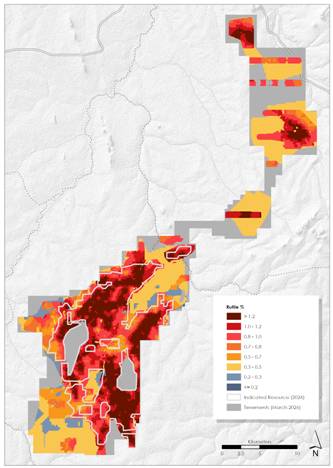
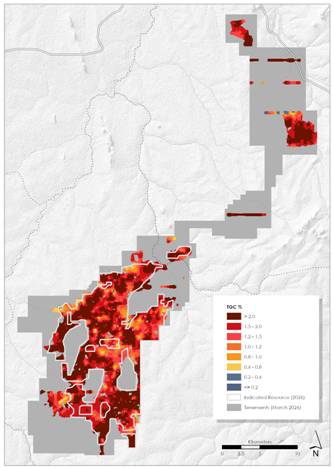
Figures 6 & 7: Kasiya March 2026 Model – Rutile (Rut94) Mineral Resource and Kasiya March 2026 Model – Graphite Mineral Resource
|
Enquiries |
|
Frank Eagar, Managing Director & CEO South Africa / Malawi +27 21 140 3190 Sapan Ghai, CCO London +44 207 478 3900 |
|
Nominated Adviser on AIM and Joint Broker |
|
|
SP Angel Corporate Finance LLP |
+44 20 3470 0470 |
|
Ewan Leggat Charlie Bouverat |
|
|
|
|
|
Joint Broker |
|
|
Stifel |
+44 20 7710 7600 |
|
Varun Talwar |
|
|
Ashton Clanfield |
|
Full data and statements here.