 Mendell Helium is pleased to announce the approval by the State of Kansas of M3 Helium Corporation’s (“M3 Helium”) Brobee salt water disposal well (“Brobee SWD”). This is the final regulatory step to bring M3 Helium’sRost 1-26 well (“Rost”) into production.
As announced on 27 June 2024, the Company has an option (the “Option”) to acquire M3 Helium, a producer of helium which is based in Kansas and holds an interest in ten wells. There is no certainty that the Company’s option to acquire M3 Helium will be exercised, nor that the enlarged group will successfully complete a re-admission.
As announced on 19 May 2025, the Brobee SWD was successfully tested as being able to accommodate over 4,500 barrels of water per day at 640 psi. M3 Helium has now received a permit from the State of Kansas to operate Brobee SWD as a disposal well with an authorised injection rate of 5,000 barrels of water per day at 1,200 psi.
This authorisation is anticipated to be in excess of the capacity required for production at Rost and therefore means that Brobee SWD, in the future, could potentially accommodate water production from offset wells to Rost.
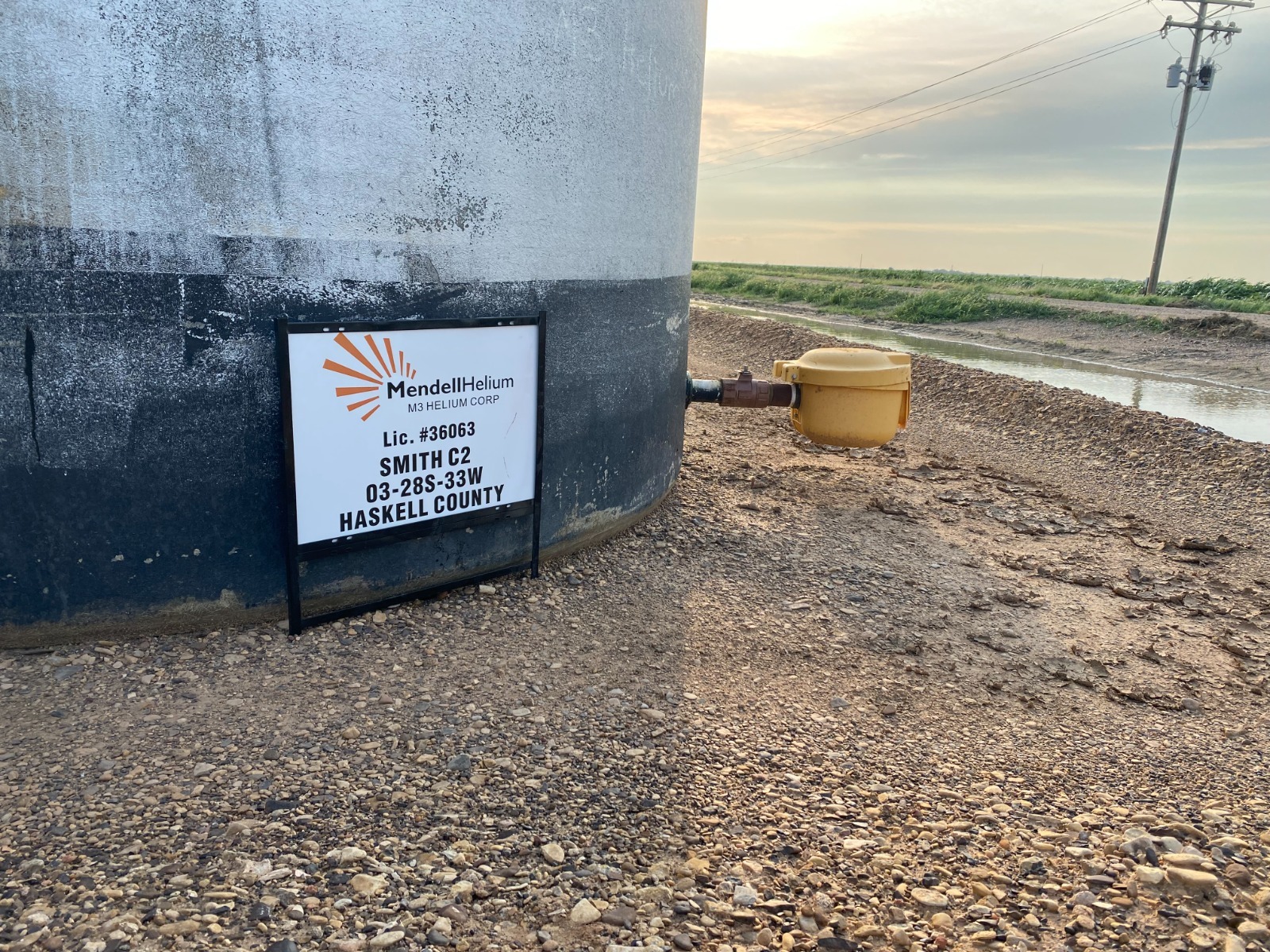
Nick Tulloch, Chief Executive Officer of Mendell Helium and Chairman of M3 Helium, said: “Although we were confident of obtaining approval, receipt of the permit for Brobee SWD nevertheless represents a significant milestone for M3 Helium. The success of Rost will always be contingent on water disposal and M3 Helium can now be satisifed that its proposed solution is both tested and permitted. Final preparations to commence production at Rost are now underway including the connection of Rost to Brobee SWD, along with the installation of water tanks and a pump.
The development of Rost and the nearby area is an important part of M3 Helium’s strategy and so I am pleased to report it is proceeding to plan. As I have said before, the amount of water disposal achieved at the Brobee SWD exceeded M3 Helium’s expectations and, as it develops offset wells in the Fort Dodge region, it has potential excess capacity that could be applied to save both time and costs.”